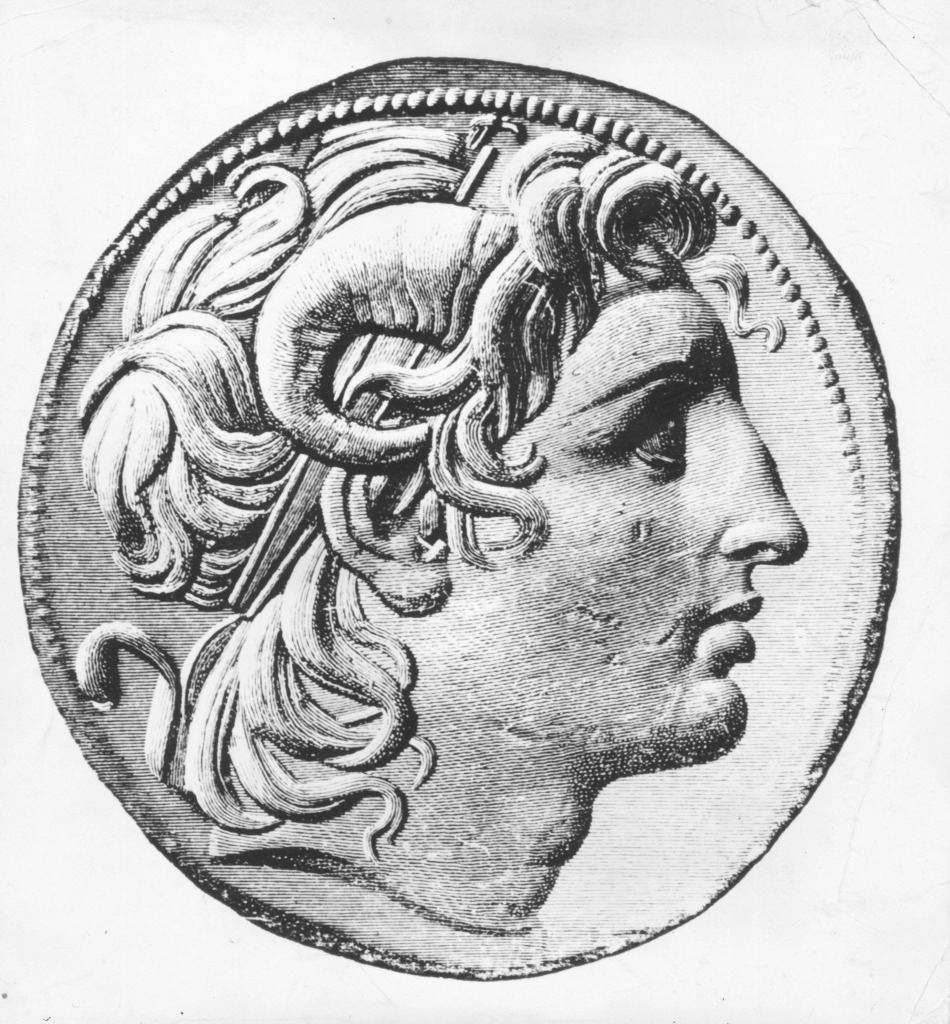
He conquered the known world by age 30. He never lost a battle. Now, 2,300 years later, we build the ultimate decentralized empire in memory of the greatest military strategist in human history. Join the march to the ends of the earth.
For 15 years of constant warfare, Alexander led his army from Macedonia to India, facing vastly superior numbers, but never suffered a single military defeat.
He spread Greek culture across Asia, founding over 70 cities bearing his name, laying down the groundwork for the Hellenistic age that shaped western civilization.
Like his Companion Cavalry, the $GREAT community values loyalty, unified action, and aggressive expansion into uncharted market territories.
Alexander fought and won countless battles. Here are the five legendary military operations that consolidated his status as a god of warfare.
The opening invasion. Alexander crossed the Hellespont into Asia Minor and met a coalition of Persian satraps on the banks of the Granicus River.
Charging directly across the rushing waters under a hail of arrows, Alexander personally led the companion cavalry, nearly dying in hand-to-hand combat before being saved by Cleitus the Black. The Persian line shattered, exposing Asia Minor to conquest.
The direct clash. Alexander faced King Darius III of Persia for the first time, whose army outnumbered the Macedonians two to one.
Exploiting the narrow coastal pass of Issus to neutralize Persian numerical superiority, Alexander drove a wedge directly at Darius' chariot. Darius panicked and fled the field, leaving behind his treasury and royal family, cementing Alexander's reputation as invincible.
The engineering marvel. Tyrian forces barricaded themselves on an island city half a mile off the coast, boasting impregnable walls.
Refusing to bypass the city, Alexander constructed a massive, 200-foot-wide stone causeway (mole) from the mainland to the island through deep waters. Using ship-mounted siege engines and custom towers, his forces breached the walls and secured Phoenicia.
The ultimate showdown. On a wide plain chosen by the Persians to deploy scythed chariots and 250,000 troops, Alexander fought for the crown of Asia.
Alexander utilized an offset diagonal advance, drawing Persian wings outward and creating a gap in their center. Leading a devastating wedge formation of Companion Cavalry directly into the opening, he forced Darius to flee once more, ending the Achaemenid Empire.
The struggle in India. Facing monsoon rains, a roaring river, and King Porus' army lined with 200 armored war elephants.
Alexander executed a brilliant night crossing of the raging river in secret. Although his cavalry horses panicked at the sight of war elephants, Alexander's infantry used pike tactics to blind the beasts, securing a brutal victory. Out of respect, Alexander left Porus as ruler.
On the afternoon of June 10 or 11, 323 BC, inside the golden palace of Nebuchadnezzar II in Babylon, the light of the ancient world flickered out. At just 32 years of age, Alexander the Great died.
Having conquered kingdoms from the Adriatic to India, his final campaign was cut short. Following a night of heavy drinking at a banquet in honor of Admiral Nearchus, Alexander was struck down by a sudden, violent fever. For 11 agonizing days, he lay paralyzed, losing the power of speech.
When asked on his deathbed by his generals to whom he left his vast empire, Alexander reportedly whispered: "Krat'eroi" — "To the strongest."
Suspects included Antipater, regent of Macedonia, and Aristotle, Alexander’s tutor, utilizing toxic water from the River Styx.
Modern theories suggest Malaria or West Nile Virus caught in the marshy waters surrounding Babylon, aggravated by alcohol abuse.
"His body did not decay for six days after his death, leading people to believe he was not a mere mortal, but a god who simply returned home."— Plutarch, Life of Alexander
A fair distribution modeled for ultimate long-term community consolidation. No hidden taxes, no central controls.
One billion tokens minted in commemoration of the unified global empire.
Tribute belongs to the conquerors. Absolutely zero developer tax on transactions.
LP tokens are permanently burned. The contract is renounced, securing the empire's keys.
Locked and burnt at launch to ensure safe, liquid, and stable trading conditions.
Reserved for marketing campaigns, CEX listings, and strategic community rewards.
Calculate your token allocation and find your status in Alexander's army based on your tribute. Pay tribute to climb the ranks from a peasant to the Emperor of Babylon.
Download Phantom or your preferred Solana wallet app from the App Store or Google Play Store. Desktop users can install the Chrome extension.
Purchase SOL on an exchange (Binance, Coinbase, Kraken) and transfer it directly to your Phantom wallet address, or buy SOL directly in Phantom.
Go to pump.fun in your Phantom browser or on your desktop. Connect your wallet and search for "$GREAT" or "Alexander The Greate Memorial".
Input the amount of SOL you wish to pay as tribute and click Buy. Once the bonding curve reaches 100%, liquidity is automatically migrated to Raydium.
A step-by-step mobilization plan to replicate his ancient conquests on the blockchain network.